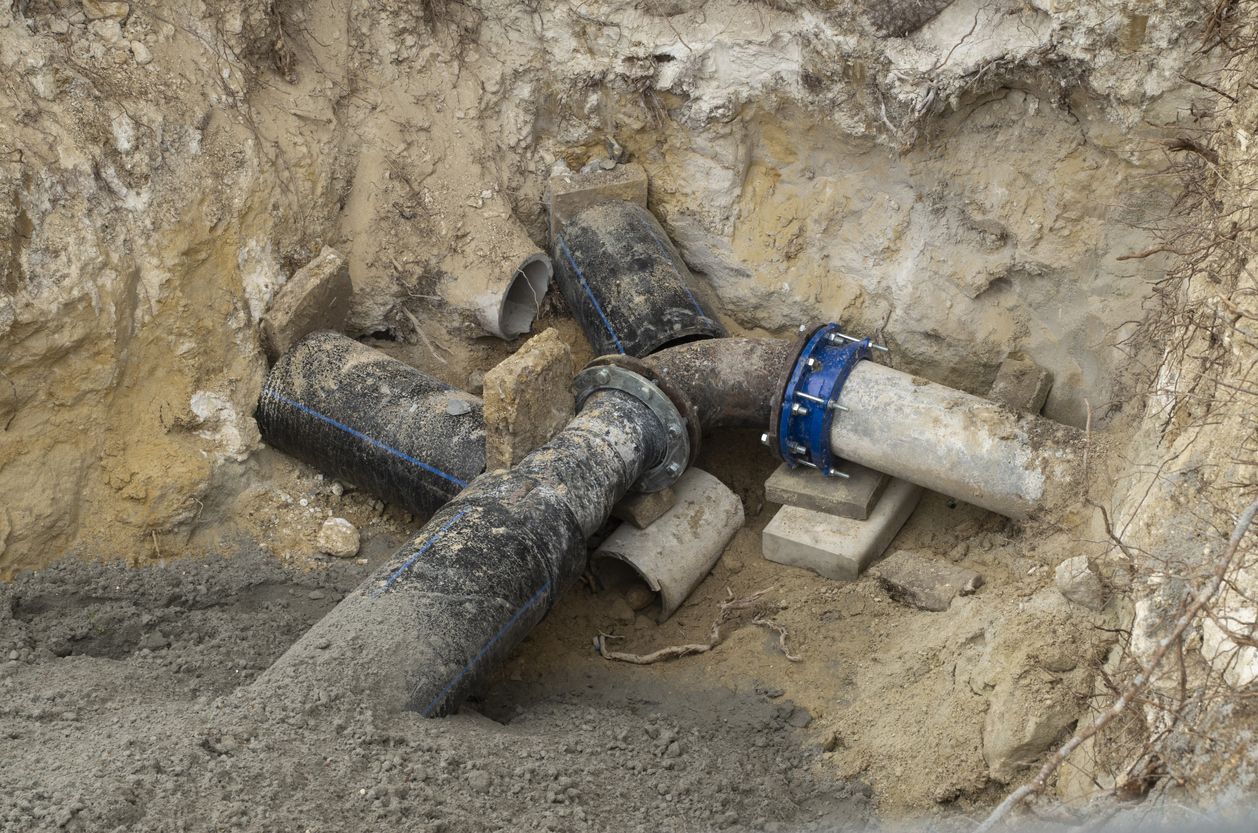
Bringing a newly installed water main into service is a routine but critical step in municipal water system expansion. Whether part of a residential subdivision, commercial development, or infrastructure upgrade, new distribution piping must meet clearly defined standards before it can be approved for use.
In theory, the process is straightforward: test the pipe, disinfect it, verify water quality, and place it into service.
In practice, many systems fail. Most often failures occur during bacteriological testing, resulting in repeated flushing, re-disinfection, and project delays.
This is not typically a failure of materials or installation.
It is most often a failure of cleaning.
The Standard Commissioning Process (AWWA Framework)
Installation → Pressure Testing → Flushing → Disinfection → Final Flushing → Bacteriological Testing → Approval
Pressure & Leakage Testing
This phase verifies structural integrity and ensures the system meets allowable leakage limits.
Typical criteria include:
- Hydrostatic pressure testing (commonly ≥150 psi)
- Leakage calculations based on pipe diameter and length
- Failures at this stage are mechanical and must be corrected before proceeding.
Disinfection (AWWA C651)
Disinfection is performed using chlorination methods defined in AWWA C651.
Typical parameters:
- Chlorine concentration: 25–50 mg/L
- Contact time: ~24 hours
- Required residual maintained
- However, disinfection effectiveness depends on prior cleaning
AWWA guidance emphasizes that mains must be thoroughly flushed to remove debris prior to disinfection. Chlorine does not remove physical contamination.
Bacteriological Testing
Final approval requires:
- Absence of total coliform bacteria
- Two consecutive passing samples
- Failure results in repeating flushing and disinfection.
Where the Process Breaks Down
Even when procedures are followed, failures occur due to physical conditions inside the pipe.
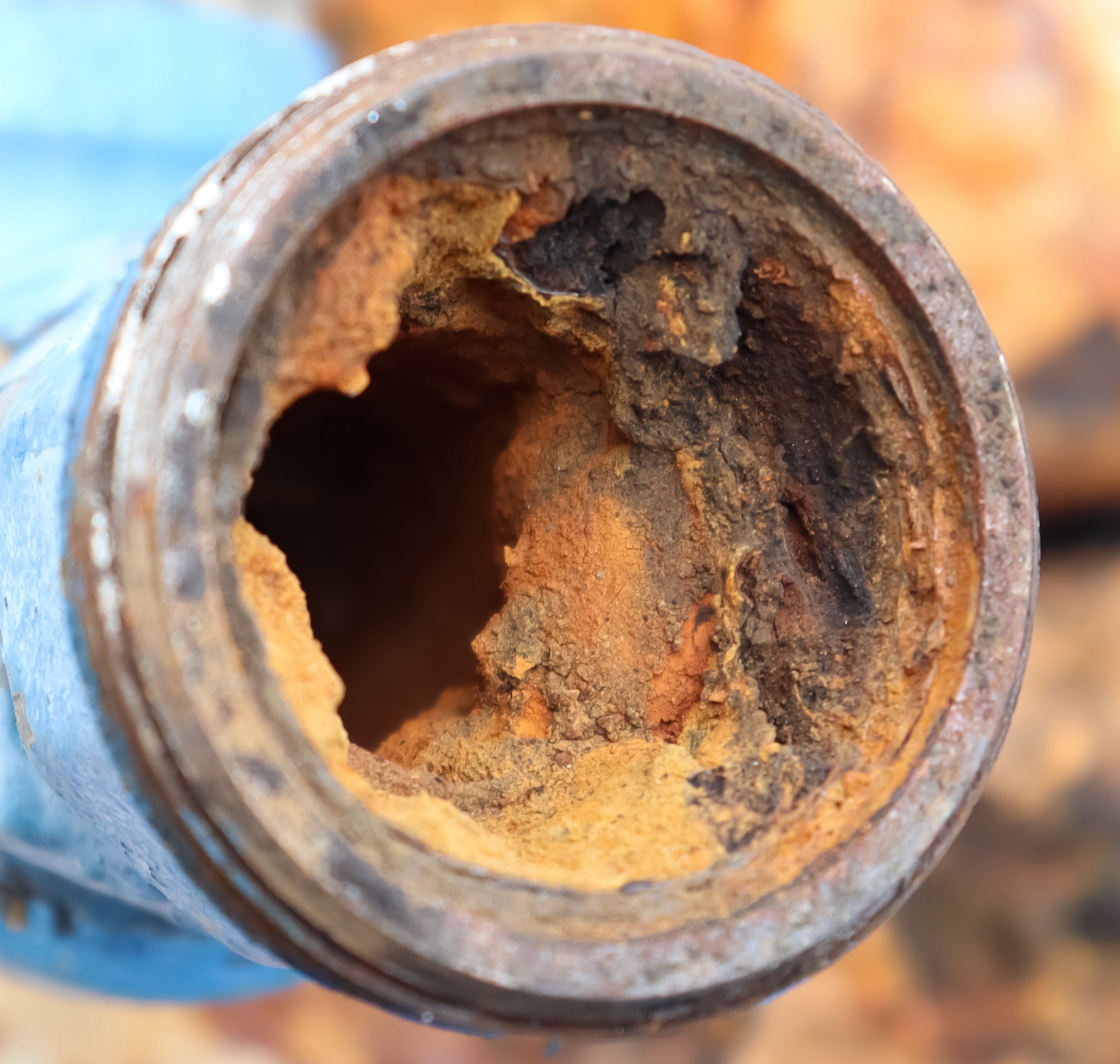
Residual Debris and Sediment
Construction introduces:
- Sand and soil
- Gasket materials
- Organic debris
These materials can shield bacteria and interfere with disinfectant contact.
Biofilm Formation
Biofilm can develop rapidly in stagnant conditions and:
- Protect bacteria from chlorine
- Adhere to pipe walls
- Require mechanical removal
Limitations of Conventional Hydrant Flushing
Hydrant flushing has been the standard approach, but it has limitations:
- Flow follows the path of least resistance
- Dead ends receive minimal cleaning
- Debris remains in system
- Large volumes of water are discharged
- Multiple re-flushing cycles are often required
Zero Discharge Flushing Process
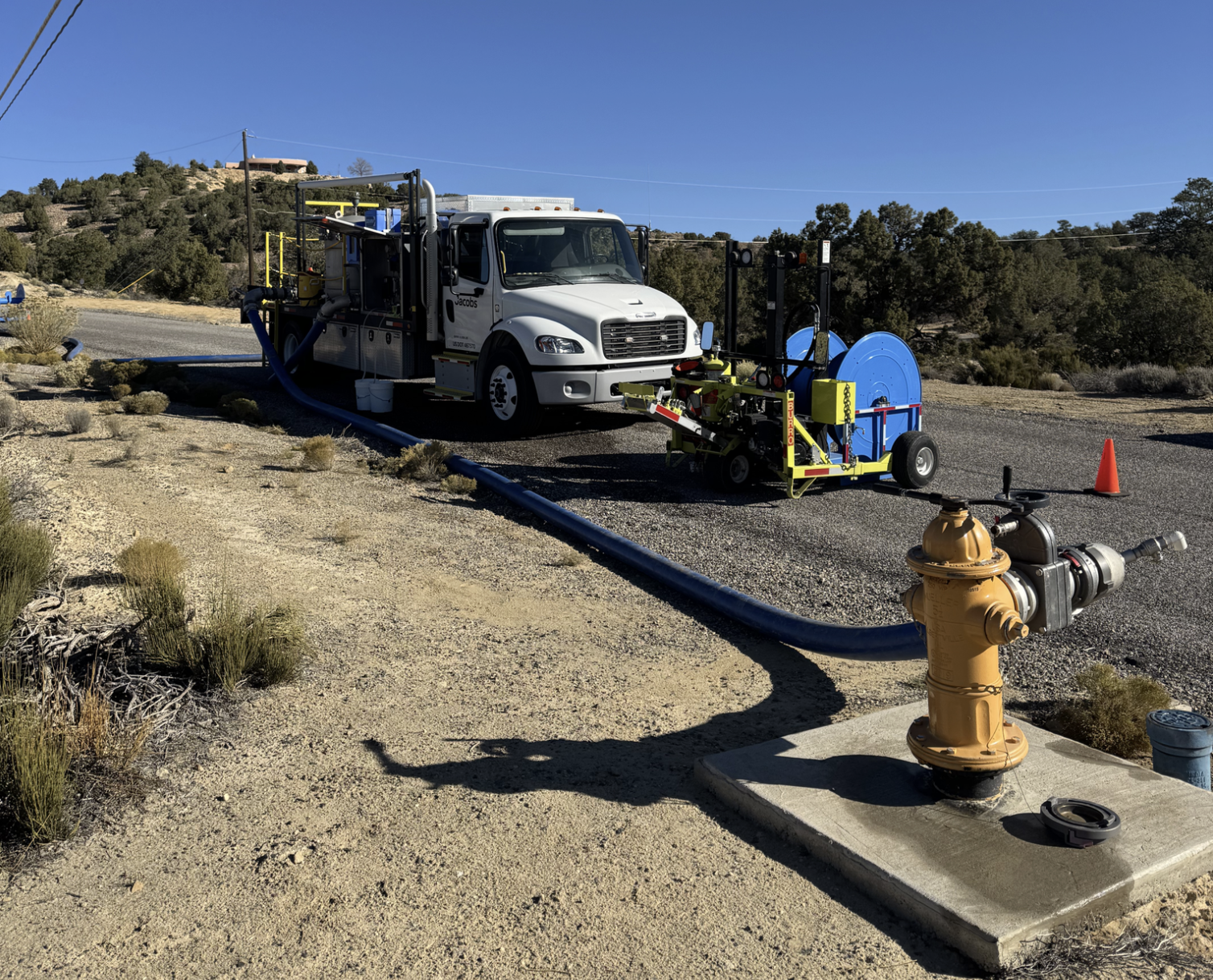
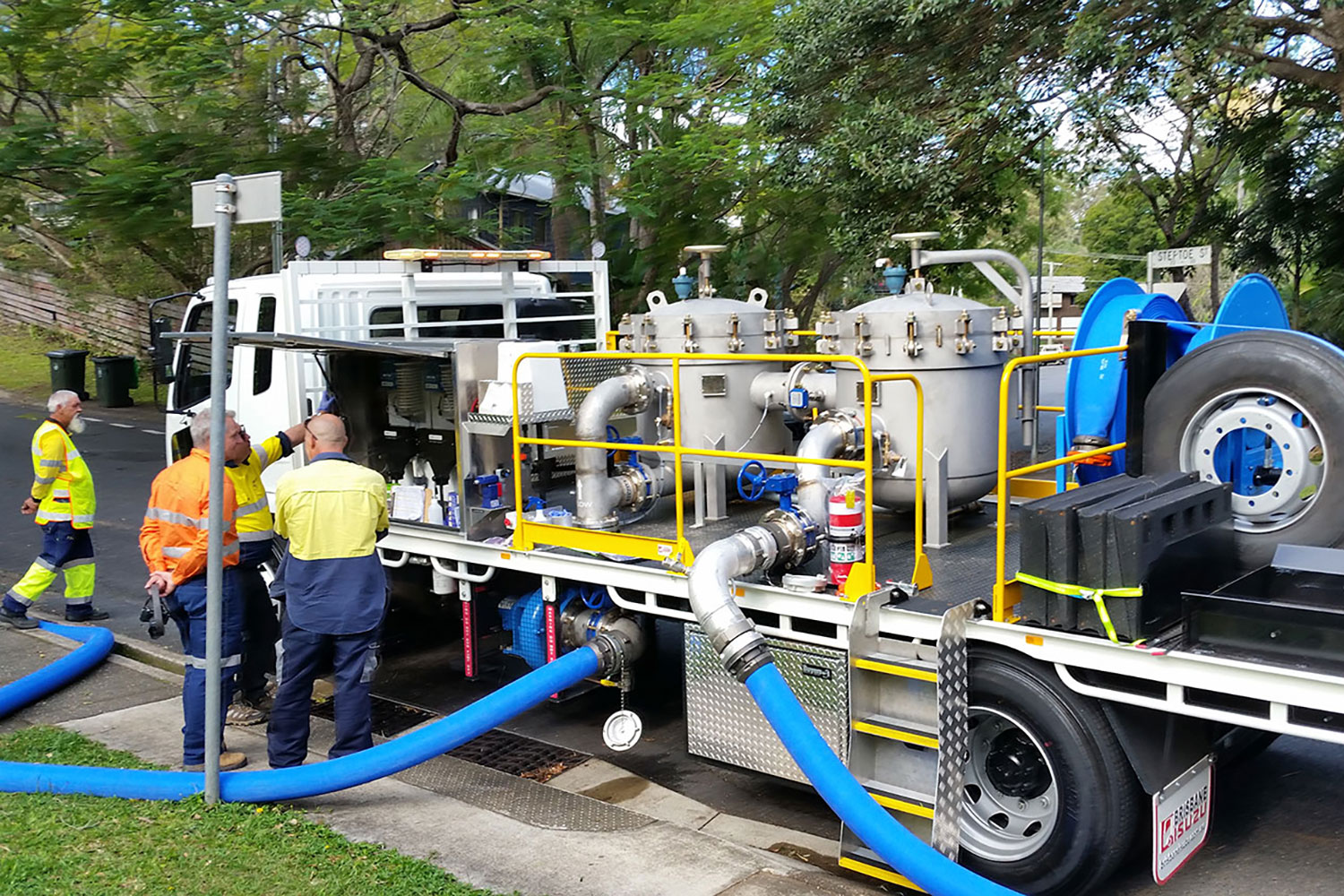
This controlled, closed-loop flushing method addresses all of these limitations.
How It Works
- Water is drawn from one hydrant and passes through filtration and is returned to another hydrant creating a controlled loop
- Velocity is 2sf per minute – scouring mains
- Filtration unit removes debris and contaminants
- Testing can be done in process to adjust
Why This Approach Improves Outcomes
Uniform Cleaning – All sections of pipe including dead ends are actively cleaned.
Physical Removal of Contaminants – Sediment and biofilm are removed, not just treated.
Improved Disinfection – Chlorine can contact pipe surfaces more effectively.
Reduced Retesting – Cleaner systems lead to more consistent bacteriological results.
Water Conservation – No discharge of treated water.
Conclusion
Failures in new water main commissioning are rarely due to improper procedures. They are most often caused by incomplete removal of debris and contaminants prior to disinfection and testing.
AWWA standards require flushing, but do not define how to ensure consistent cleaning.
When flushing is treated as a controlled cleaning process rather than a discharge activity, outcomes improve significantly leading to faster approvals, fewer delays, and better system performance.